Finding time again, slowly
Walk the same street three times and you will see three different cities.
Starter theme · 3 / 4
Long reads that start in the dark.
A dark page with warm off-white text and an amber accent, and a light appearance readers can switch to. The top bar always shows percent read and time left, and readers choose their own text size and column width.
After you sign up, the design step builds a Night Reading preview from your own Notion content in one click. Starting from a theme uses no AI credits.
Notes on walking, public space and neighbourhood life.
Walk the same street three times and you will see three different cities.
The same 400 metres can take ten minutes on one street and half an hour on another.
Crossings, slopes and waits at the lights decide what is in reach, not the distance on a map.
Whether a bench faces people or traffic decides whether anyone sits on it.
At seven in the morning, the market is the busiest public room in the neighbourhood.
A continuous line of awnings keeps a street walkable on a rainy afternoon.
Corner shops, late-night stalls and last-bus stops draw a second map of the city.
Older posts →
 Walking CitySearchAa
ESSAY · LIFE
Lin Chuan · September 20, 2026 · 6 min read
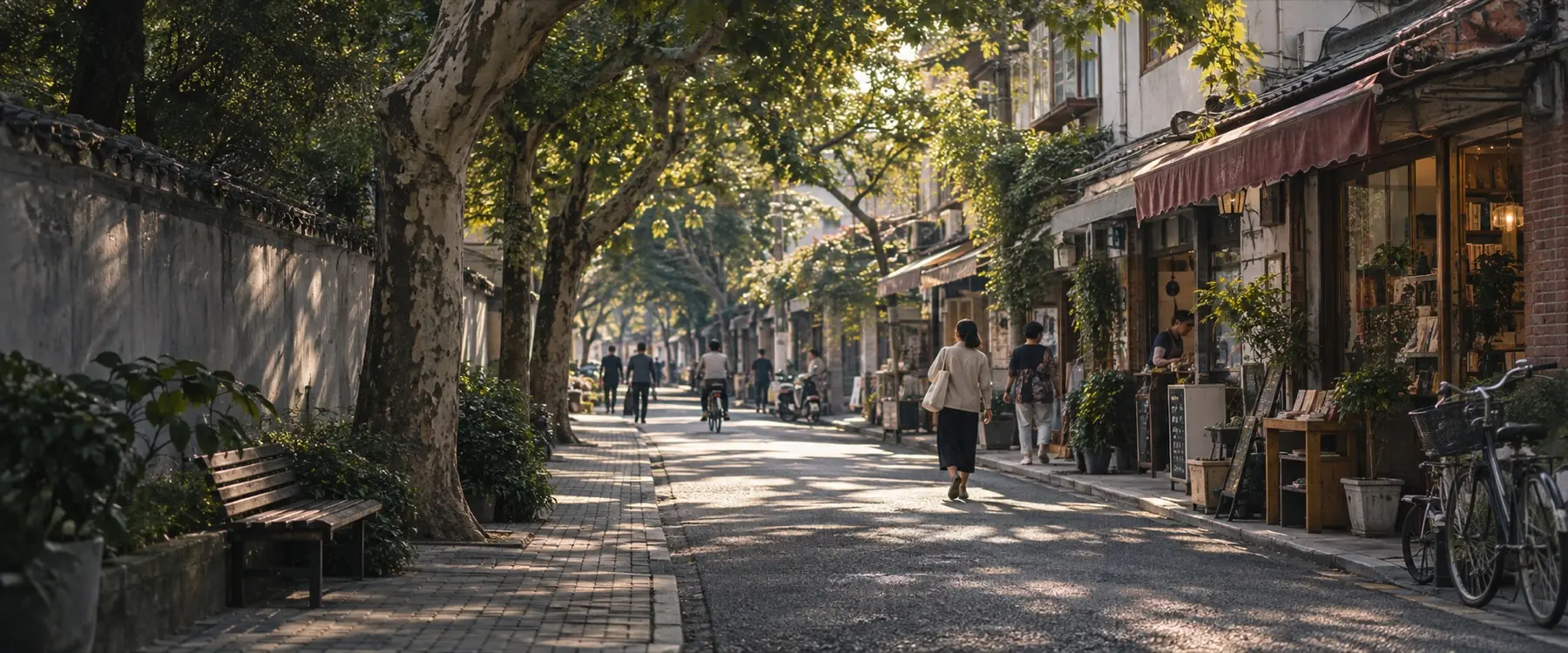
I walked the same street three times: at eight in the morning, two in the afternoon and nine at night. In the morning the pavement belongs to people in a hurry; in the afternoon a few benches under the trees fill up; at night the bookshop on the corner lights up half the street.
You need no instruments to see these changes, only a stretch of time nobody interrupts. I put my phone on do-not-disturb and took a small notebook and a pencil.
A city is not only its master plans and landmarks. It is also the stretch of road, the corner and the bench we pass every day.
On the second walk I started sketching: where the shade falls, which benches are always taken, at which crossing people slow down without thinking. Once drawn, many vague impressions became concrete.
One observation may cover only ninety minutes, yet it is enough for a familiar road to show new detail. Laying the three sketches on top of each other, I found that what really shapes this street are the pauses nobody planned.
Next time I want to walk it in the rain.
ESSAY · ISSUE 42
Walk the same street three times and you will see three different cities.
I walked the same street three times: at eight in the morning, two in the afternoon and nine at night. In the morning the pavement belongs to people in a hurry; in the afternoon a few benches under the trees fill up; at night the bookshop on the corner lights up half the street.
You need no instruments to see these changes, only a stretch of time nobody interrupts. I put my phone on do-not-disturb and took a small notebook and a pencil.
On the second walk I started sketching: where the shade falls, which benches are always taken, at which crossing people slow down without thinking. Once drawn, many vague impressions became concrete.
“A city is not only its master plans and landmarks. It is also the stretch of road, the corner and the bench we pass every day.”
One observation may cover only ninety minutes, yet it is enough for a familiar road to show new detail. Laying the three sketches on top of each other, I found that what really shapes this street are the pauses nobody planned.
Next time I want to walk it in the rain.
ESSAY · LIFE · 6 MIN
Lin Chuan September 20, 2026
I walked the same street three times: at eight in the morning, two in the afternoon and nine at night. In the morning the pavement belongs to people in a hurry; in the afternoon a few benches under the trees fill up; at night the bookshop on the corner lights up half the street.
You need no instruments to see these changes, only a stretch of time nobody interrupts. I put my phone on do-not-disturb and took a small notebook and a pencil.
A city is not only its master plans and landmarks. It is also the stretch of road, the corner and the bench we pass every day.
On the second walk I started sketching: where the shade falls, which benches are always taken, at which crossing people slow down without thinking. Once drawn, many vague impressions became concrete.
One observation may cover only ninety minutes, yet it is enough for a familiar road to show new detail. Laying the three sketches on top of each other, I found that what really shapes this street are the pauses nobody planned.
Next time I want to walk it in the rain.
A city is not only its master plans and landmarks. It is also the stretch of road, the corner and the bench we pass every day.
I walked the same street three times: at eight in the morning, two in the afternoon and nine at night. In the morning the pavement belongs to people in a hurry; in the afternoon a few benches under the trees fill up; at night the bookshop on the corner lights up half the street.
You need no instruments to see these changes, only a stretch of time nobody interrupts. I put my phone on do-not-disturb and took a small notebook and a pencil.
On the second walk I started sketching: where the shade falls, which benches are always taken, at which crossing people slow down without thinking. Once drawn, many vague impressions became concrete.
One observation may cover only ninety minutes, yet it is enough for a familiar road to show new detail. Laying the three sketches on top of each other, I found that what really shapes this street are the pauses nobody planned.
Next time I want to walk it in the rain.
The Walking City sample blog in this starter, as it looks before any changes. Click the first post to open it.
Percent read and time left stay in the bar while the reader scrolls, so they always know how much is left.
The page starts dark. Readers who prefer a light page can switch, and the choice stays on their device.
Three text sizes and three column widths, chosen by each reader in the Aa panel.
The home page is a single column of dates, tags, titles and excerpts, with no covers in between.
Night Reading leaves out site search, a contents panel and share buttons, so the page holds only the writing. Ask for any of them in Theme studio.
Personal writing and long reads with a dark starting tone. Try the appearance controls before deciding whether light or dark should be the default.
Bring a few long pieces and check them in both light and dark appearance, including images, which can feel heavy on a dark page. Decide which appearance should be the default before you share the site, and save a version you like before experimenting further.
In Theme studio, describe a change in a sentence. Each change becomes a version you can preview on your own content; publish the one you like and return to an earlier one at any time. Some requests to start from:
Make the light appearance the default and keep dark as an option readers can switch to.
In dark mode, use a warmer off-white for body text and a muted gold for links.
Add a short Now note above the article list on the homepage.
Show the reading time in the article list as well as inside each article.
These example sites were each designed in Theme studio from a short written brief, with no starter underneath.
Connect a Notion database, preview the starter on your own posts, then change whatever you like.